
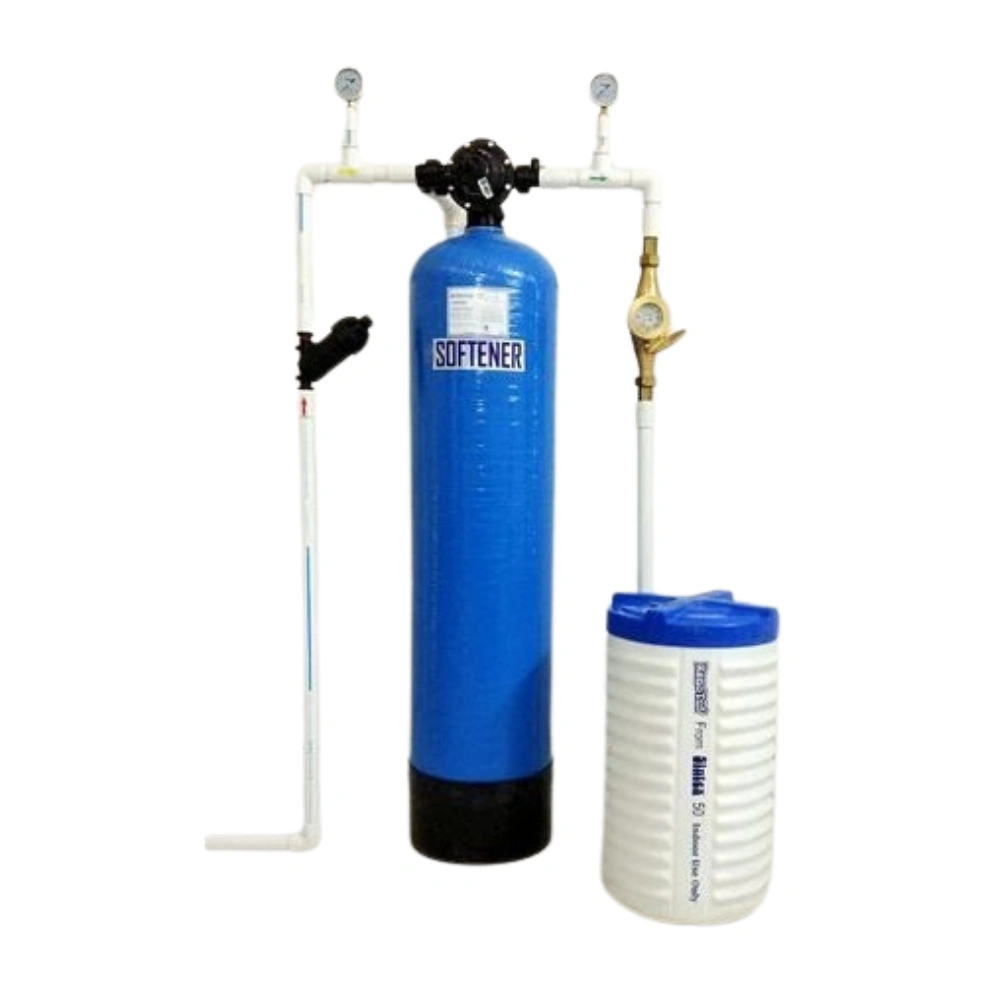
Manual water softener
Manual water softener is an effective water treatment system designed to reduce hardness-causing minerals such as calcium and magnesium from water. Its manual regeneration process makes it a simple and cost-effective solution for residential, commercial, and industrial water-treatment applications.
Description
The manual water softener is a reliable water treatment system designed to reduce water hardness and minimize scale formation in plumbing, water heaters, ro plants, boilers, and other water-using equipment.
The system works using the ion exchange process, where hardness-causing calcium and magnesium ions are exchanged with sodium ions through a specially designed cation exchange resin bed. This helps produce softened water that is more suitable for various domestic, commercial, and industrial applications.
Unlike automatic softeners, the regeneration process of a manual water softener is controlled by an operator. When the resin reaches its softening capacity, a suitable salt/brine solution is manually introduced to regenerate the resin. This makes the system straightforward to operate and maintain.
The manual water softener can be customized according to raw-water hardness, required flow rate, resin quantity, vessel size, water consumption, and application requirements.
Key Features
- Manual water softening system
- Ion exchange technology
- Helps reduce calcium and magnesium hardness
- Manual regeneration process
- Helps minimize scale formation
- Helps protect RO membranes and downstream equipment
- Simple and economical operation
- Low-maintenance design
- Suitable for residential, commercial, and industrial applications
- Available in different capacities
- Can be customized according to water quality
Applications
Manual Water Softener is suitable for:
- Homes and apartments
- Hotels and resorts
- Restaurants and commercial kitchens
- Laundry facilities
- Hospitals
- Schools and institutions
- RO plant pre-treatment
- Boiler feed-water pre-treatment
- Industrial water-treatment systems
- Manufacturing units
- Commercial establishments
How Manual Water Softener Works
Hard water enters the softener vessel and passes through the cation exchange resin. The resin captures hardness-causing calcium and magnesium ions, helping reduce the overall hardness of the treated water.
After the resin becomes exhausted, the operator initiates the manual regeneration process using a salt or brine solution. The brine restores the resin’s ion-exchange capacity. The system is then rinsed before being returned to service.
Benefits
- Helps reduce water hardness
- Helps minimize scale formation
- Reduces calcium and magnesium deposits
- Helps protect RO membranes and water-treatment equipment
- Simple manual operation
- Cost-effective water-softening solution
- Does not require complex automation
- Easy to maintain
- Suitable for different water-treatment capacities
- Can be customized according to application requirements
| Product Name | Manual Water Softener |
| Treatment Technology | Ion Exchange |
| Primary Function | Reduction of Water Hardness |
| Hardness Removal | Calcium & Magnesium Ions |
| Control System | Manual Multiport Valve |
| Regeneration | Manual |
| Filter Media | Cation Exchange Resin |
| Vessel Material | FRP / MS / SS as required |
| Flow Capacity | As per system requirement |
| Raw Water Hardness | As per system design |
| Operating Pressure | As per system requirement |
| Regeneration Type | Manual Brine Regeneration |
| Salt Requirement | As per system capacity |
| Installation | Vertical / As per site requirement |
| Application | Residential, Commercial & Industrial |
| RO Pre-Treatment | Suitable |
| Customization | Available |
| Country of Origin | India |
Only logged in customers who have purchased this product may leave a review.
Reviews
There are no reviews yet.